
Views: 0 Author: Site Editor Publish Time: 2026-07-29 Origin: Site


The deployment of high-density 5G networks and edge computing infrastructure pushes remote equipment enclosures to their thermal and spatial limits. This exposes the vulnerabilities of traditional thermal circuit protection. Temperature fluctuations in outdoor base stations and dense server racks cause thermal breakers to derate. You get nuisance tripping in the summer or delayed tripping in the winter. This results in unnecessary maintenance dispatches and unacceptable network downtime.
To achieve continuous uptime in unpredictable environments, telecom engineers standardize on hydraulic magnetic circuit protection. This guide evaluates how this technology operates, key selection criteria for telecom applications, and implementation trade-offs. We focus on practical field deployment and engineering specifications to keep remote sites online.
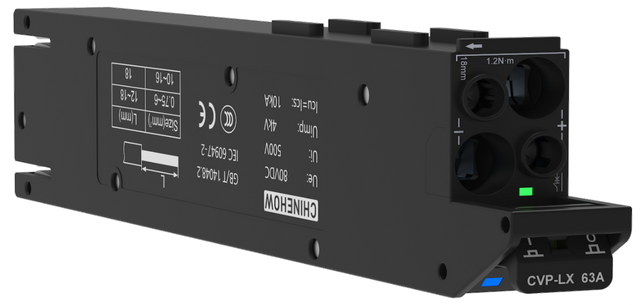
Temperature Independence: Hydraulic magnetic breakers trip based on current-induced magnetic flux, not heat, ensuring consistent performance from -40°C to +85°C without derating.
Optimized for DC Power: These breakers are inherently suited for the 48VDC architectures standard in telecom and broadband networks.
Reduced Operational Burden: The elimination of temperature-induced nuisance tripping drastically reduces remote maintenance dispatches and improves network reliability.
Orientation Constraints: Unlike thermal breakers, hydraulic magnetic units rely on gravity and fluid dynamics, meaning mounting orientation must be strictly factored into panel design.
Table of Contents
Telecom power distribution requires 99.999% reliability regardless of ambient environmental conditions. Network operators cannot tolerate power interruptions caused by environmental factors rather than actual electrical faults. Modern deployments face severe thermal realities in the field. Unconditioned outdoor macro cell cabinets, pole-mounted small cells, and densely packed 1U/2U rackmount Power Distribution Units experience wild temperature swings. These enclosures trap heat generated by active electronics. External weather conditions further exacerbate internal temperatures, pushing components past their standard operating limits.
Traditional thermal bimetallic strip breakers operate on a mechanism that fails in these environments. They rely on heat to function. As current passes through the bimetallic strip, it heats up and bends. It eventually breaks the circuit during an overload. Ambient heat artificially lowers this trip threshold. A breaker rated for 20 amps might trip at 15 amps on a hot summer day. This causes nuisance tripping. Extreme cold stiffens the bimetallic strip. This raises the trip threshold, allowing dangerous overcurrents to persist longer than intended. This introduces severe equipment damage risks to sensitive radio heads.
The operational impact of false trips is substantial. Nuisance tripping directly leads to offline cell sites and degraded network coverage. Emergency technician dispatches to remote or hard-to-access cell sites drain maintenance resources rapidly. Restoring power often requires a simple manual reset. This makes the truck roll entirely preventable if the correct temperature-stable protection device was utilized from the start. Engineers must design panels that ignore ambient weather entirely.
Field technicians frequently encounter thermal breakers that have degraded over time due to constant thermal cycling. The bimetallic strip loses its original calibration after repeated exposure to extreme heat and cold. This degradation leads to unpredictable trip curves. A breaker that held 15 amps perfectly in year one might start tripping at 12 amps in year three. This forces premature replacement of the entire PDU or individual breakers. Upgrading the protection mechanism eliminates this degradation variable.
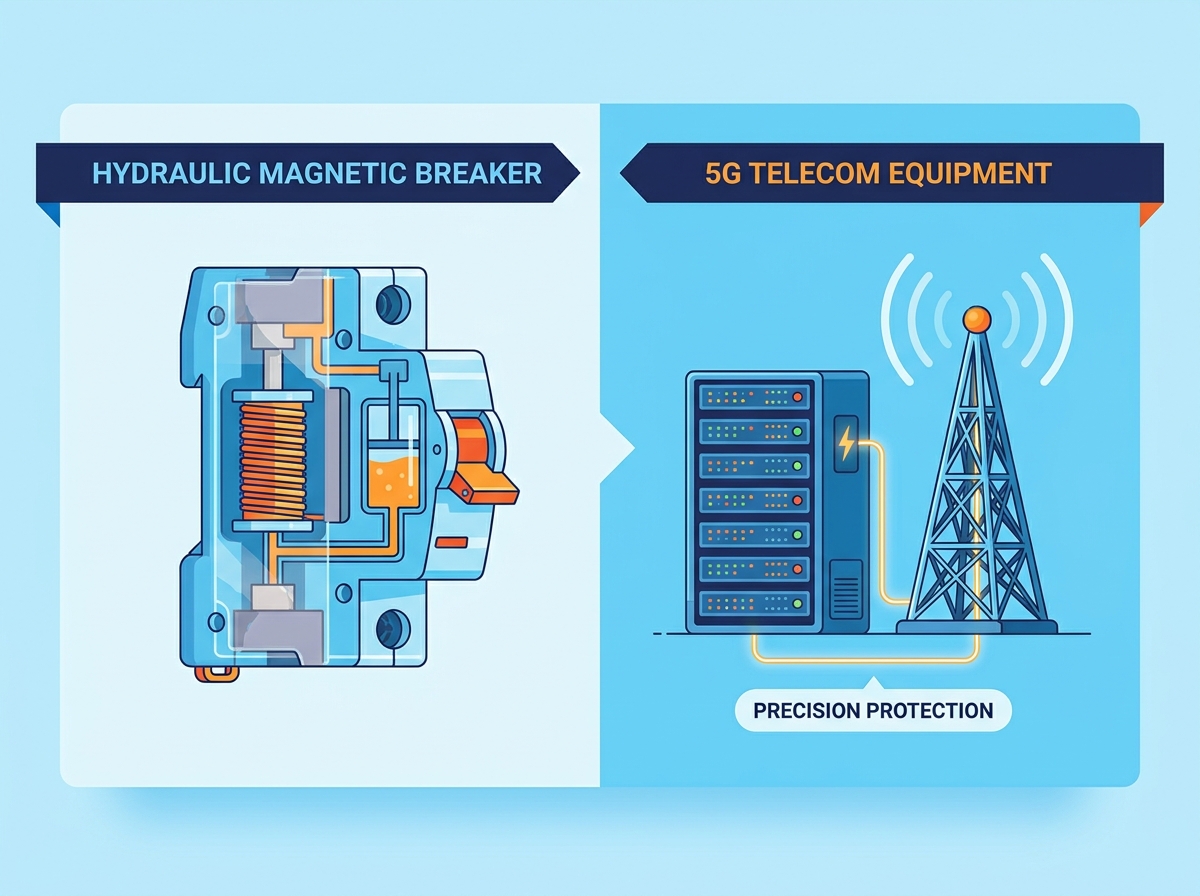
Understanding the operational mechanics of different circuit protection technologies dictates network reliability. Thermal breakers rely on heat. Thermal-magnetic breakers combine heat and magnetic force. Hydraulic-magnetic breakers rely entirely on magnetic flux and fluid dynamics. This fundamental difference makes hydraulic-magnetic technology superior for unconditioned telecom environments.
Feature | Thermal Breaker | Hydraulic-Magnetic Breaker |
|---|---|---|
Trip Mechanism | Bimetallic strip (Heat-dependent) | Solenoid and dashpot (Magnetic-dependent) |
Temperature Derating | High (Requires derating calculations) | None (100% rated independent of ambient temp) |
Reset Time After Fault | Delayed (Must cool down first) | Immediate (No cooling required) |
Inrush Current Handling | Fixed based on physical strip | Customizable via fluid viscosity (Trip curves) |
The internal design features a solenoid coil wrapped around a hollow tube containing a spring-loaded iron core and a specialized silicone fluid. This fluid-filled tube is known as a dashpot. When normal current flows, the magnetic field is not strong enough to move the core. During an overload, the magnetic field strengthens. It pulls the iron core through the fluid. The magnetic field strength is determined solely by the current. This makes the ambient temperature completely irrelevant to the trip point. Once the core reaches the pole piece, the magnetic circuit closes, instantly tripping the breaker.
These devices offer exceptional precision in high-density DC power systems. A hydraulic magnetic breaker telecom application is perfectly suited for standard -48VDC telecom power plants, rectifiers, and battery backup systems. They are engineered to handle DC arc extinguishing effectively. This is a critical requirement since DC arcs do not naturally self-extinguish like AC arcs at the zero-crossing point. Special arc chutes and magnetic blowouts direct the arc away from the contacts to extinguish it rapidly.
Modern 5G stations increasingly utilize LiFePO4 battery backup systems. These chemistries deliver extremely high short-circuit currents. Hydraulic magnetic breakers manage these scenarios through High Interrupting Capacity ratings. They safely clear massive faults without catastrophic failure. Because there is no bimetallic strip to cool down, these breakers can be reset immediately after a fault is cleared. This immediate reset capability significantly reduces the mean time to recovery during critical network outages.
Mapping specific breaker specifications to telecom network reliability outcomes ensures optimal system performance. The primary consideration is selecting the appropriate trip curve for telecom loads. The time delay in a hydraulic magnetic breaker is determined by the viscosity of the silicone fluid inside the dashpot. Thicker fluid slows the iron core, creating a longer delay. Thinner fluid allows for a faster trip.
Analyze the Load Profile: Determine the exact steady-state current and the peak inrush current of the connected radio equipment.
Select the Trip Curve: Match the fluid viscosity to the load. Short delays work for sensitive baseband units. Medium and long delays handle the heavy inrush of rectifiers.
Verify Voltage Ratings: Ensure the breaker is explicitly rated for the maximum DC voltage of the battery plant, typically 60VDC or 80VDC for a nominal 48V system.
Determine Form Factor: Select bullet terminals for hot-swappable PDUs or stud mounts for permanent busbar installations.
Specify Telemetry Needs: Add auxiliary contacts for remote NOC monitoring.
Engineers must evaluate short, medium, and long delay curves based on the connected equipment. Short delays are suitable for sensitive electronics with minimal inrush. Medium and long delay curves are strictly required to handle the substantial inrush currents of 5G radio heads, switch-mode power supplies, and telecom rectifiers. Selecting a curve that is too fast will result in false tripping during normal equipment startup sequences. This defeats the purpose of upgrading the protection device.
Physical constraints dictate form factor and rack density choices. Standard telecom form factors range from 1-pole to multi-pole configurations. Connections often utilize bullet terminals for hot-swappable PDU designs. Others require plug-in or stud mount variations. These compact designs are essential to fit within low-profile 1U or 2U rackmount PDUs without sacrificing port density. Space is always at a premium in edge computing enclosures.
Remote telemetry and status monitoring are non-negotiable for modern Network Operations Centers. Breakers must integrate auxiliary switches and alarm contacts. These internal switches change state when the breaker trips. They provide real-time telemetry back to the NOC. This allows operators to immediately distinguish between a grid power failure and a localized overcurrent fault. It streamlines the troubleshooting process before a technician even leaves the depot.
Compliance with authoritative standards guarantees safety and interoperability. It is vital to distinguish between UL 489 and UL 1077 within telecom power distribution topologies. UL 489 breakers can act as the primary overcurrent protection device. UL 1077 devices require upstream protection. Mandatory international certifications include IEC/EN 60947-2, CCC, and NEBS compliance. NEBS Level 3 is critical for equipment deployed in central office environments.

Balancing initial component specifications against long-term operational reliability requires a broad view of network maintenance. A hydraulic magnetic breaker carries different engineering requirements than standard thermal breakers. The value comes from the prevention of remote maintenance dispatches. A single prevented truck roll to a mountain-top cell site justifies the specification of high-grade magnetic protection across the entire PDU.
Equipment lifespan directly correlates with precise overcurrent protection. Sensitive 5G radio and baseband equipment degrades when exposed to sustained, low-level overcurrents that thermal breakers might ignore during cold weather. Hydraulic magnetic breakers maintain their exact trip threshold year-round. They cut power exactly when specified, protecting the internal circuitry of high-value telecom assets.
Mean Time To Recovery improves drastically. When a fault occurs and is cleared, technicians can reset the breaker immediately. There is no waiting period for a bimetallic strip to cool down. In emergency restoration scenarios, every minute of downtime impacts service level agreements. Immediate reset capabilities streamline the restoration workflow for field crews.
Inventory management also benefits from this technology. Because hydraulic magnetic breakers do not require temperature derating calculations, engineers can standardize on fewer part numbers. A 20A breaker works as a 20A breaker in Alaska and in Arizona. This reduces the complexity of spare parts inventory kept at regional maintenance depots.
Adopting this technology requires navigating specific physical and engineering challenges. The most critical factor is orientation sensitivity. The internal iron core moves through the silicone fluid against the force of gravity. Mounting the breaker upside down or at severe angles alters the gravitational pull on the core. This directly changes the trip characteristics and time delay.
Implementation Risk | Engineering Mitigation Strategy |
|---|---|
Orientation Sensitivity | Specify mounting plane during procurement; align panel design with gravity requirements. |
Magnetic Cross-Talk | Apply physical spacing; use integrated magnetic shielding; apply slight derating margin. |
Vibration and Shock | Select MIL-SPEC or high-vibration rated units with reinforced dampening. |
Retrofit Clearance | Verify busbar alignment and measure depth clearance for deeper magnetic housings. |
To mitigate orientation risks, engineers must specify the exact mounting plane during the procurement phase. Panel designs must strictly accommodate the manufacturer's orientation requirements. Failing to align the breaker correctly will compromise the precise overcurrent protection it was designed to provide. Always consult the manufacturer's datasheet for acceptable mounting angles.
Magnetic cross-talk presents another challenge in high-density installations. When multiple magnetic breakers are packed tightly adjacent to one another in 1U/2U PDUs, their magnetic fields can interact. This interaction can slightly lower the trip threshold of neighboring units. It causes them to trip prematurely under heavy loads. Mitigation strategies include applying appropriate physical spacing between breakers. Engineers can specify breakers manufactured with integrated magnetic shielding.
Vibration and shock in remote environments affect performance. High-vibration environments, such as enclosures mounted near railways, heavy industrial zones, or wind-prone towers, agitate the internal mechanism and fluid. Select breakers with specific MIL-SPEC or high-vibration ratings. These ruggedized units feature reinforced internal springs and dampening mechanisms designed specifically for harsh telecom enclosures.
Integration with existing PDUs requires careful planning. Retrofitting older telecom cabinets with new hydraulic magnetic units involves verifying terminal compatibility and busbar alignment. Physical clearance must be measured accurately. Hydraulic magnetic units sometimes feature deeper housing profiles than the legacy thermal breakers they replace. Ensure the cabinet doors can close fully after installation.
Hydraulic magnetic breakers have become the preferred circuit protection solution for modern telecom infrastructure, 5G base stations, broadband networks, and edge computing facilities. Their temperature-independent trip performance, superior DC protection capability, and long-term reliability help network operators reduce nuisance tripping, improve system availability, and maintain continuous operation in demanding environments.
To ensure the best protection for your telecom power systems, consider the following recommendations:
Select hydraulic magnetic breakers with the appropriate trip curve, DC voltage rating, and interrupting capacity for your application.
Verify compliance with NEBS, UL, IEC, and other industry standards to ensure carrier-grade reliability.
Review mounting orientation, panel layout, and environmental conditions before installation to maximize breaker performance.
Validate breaker performance through environmental testing and real-world application verification before large-scale deployment.
With years of experience in circuit protection technology and electrical power distribution solutions, CHINEHOW has become a trusted manufacturer of hydraulic magnetic circuit breakers, thermal circuit breakers, rocker switches, and customized electrical protection products for customers worldwide. Supported by advanced research and development, precision manufacturing, comprehensive quality management, and strict international certification standards, CHINEHOW delivers highly reliable products that serve telecommunications, industrial automation, renewable energy, transportation, marine, and critical power applications.
From hydraulic magnetic breakers for carrier-grade telecom systems to customized circuit protection solutions for demanding industrial environments, CHINEHOW provides professional engineering support, application consulting, product customization, and dependable global technical services. By combining innovative technology with extensive industry expertise, CHINEHOW helps customers improve electrical safety, enhance equipment reliability, and build resilient power distribution systems for long-term operational success.
A: Thermal breakers trip based on heat generated by current passing through a bimetallic strip. They are highly sensitive to ambient temperatures. Hydraulic magnetic breakers use a fluid-filled dashpot and a magnetic coil. They trip based purely on current-induced magnetic flux. This renders them completely independent of ambient temperature fluctuations in telecom enclosures.
A: No, they do not derate. Their tripping mechanism relies entirely on magnetic force rather than heat accumulation. They maintain a 100% current rating even in extreme heat. This prevents the nuisance tripping commonly experienced with thermal breakers in outdoor 5G base stations during summer months.
A: They are engineered to handle the specific challenges of DC power, including effective DC arc suppression. They provide highly precise trip points that protect sensitive telecom electronics. Their temperature stability ensures reliable operation in the unconditioned environments where 48VDC systems are typically deployed.
A: UL 489 breakers are certified for branch circuit protection and act as the standalone primary protection device in a circuit. UL 1077 breakers are recognized as supplementary protectors. They provide targeted equipment protection but legally require a UL 489 device upstream in the power path to handle catastrophic short circuits.
A: No. The internal iron core moves through fluid against gravity. Mounting the breaker at incorrect angles alters the gravitational pull on the core. This changes the trip time and characteristics. They must be mounted in the specific orientation they were calibrated for by the manufacturer.
A: When mounted tightly together, the magnetic fields of adjacent breakers can interact. This cross-talk can artificially lower the trip threshold of a neighboring breaker, causing premature tripping. Prevent this by using physical spacing, integrated magnetic shielding, or applying a slight derating margin during panel design.


