
Views: 0 Author: Site Editor Publish Time: 2026-09-21 Origin: Site


In mission-critical electrical systems, the hidden costs of nuisance tripping or delayed fault responses often stem from a fundamental mismatch between the circuit breaker's operating mechanism and its deployment environment. Fluctuating ambient temperatures and complex load profiles require precise circuit protection. Relying on standard thermal mechanisms in extreme or variable environments forces engineers to calculate complex derating curves, risking either premature tripping or catastrophic equipment failure.
This guide provides a technical evaluation of a hydraulic magnetic circuit breaker versus thermal magnetic alternatives, detailing their operating principles, performance under thermal stress, and specific application criteria to ensure accurate specification.
Temperature Immunity: Hydraulic Magnetic Circuit Breakers are largely unaffected by ambient temperature fluctuations, eliminating the need for temperature derating required by thermal magnetic breakers.
Trip Speed and Precision: Thermal mechanisms offer delayed responses suitable for moderate overloads (like motor starting) and provide reliable calibration at near-running overloads, while hydraulic magnetic mechanisms respond faster to faults and provide highly precise, customizable trip curves based on fluid viscosity.
Reset Capabilities: Hydraulic magnetic breakers allow for immediate resetting after a trip, whereas thermal magnetic breakers require a mandatory cooling period for the bimetallic strip.
Application Alignment: Selection depends heavily on environmental stability; thermal magnetic is cost-effective for climate-controlled environments, while hydraulic magnetic is essential for outdoor, marine, data center, and high-density panel applications.
Table of Contents
Circuit breakers use different mechanisms to detect overloads and short circuits. Thermal magnetic breakers rely on heat and magnetic force, while hydraulic magnetic breakers use magnetic force with fluid control. Understanding their working principles helps engineers select the right protection method for different applications.

Thermal magnetic breakers use two protection methods:
Thermal protection: A bimetal strip detects long-term overloads.
Magnetic protection: An electromagnet responds to sudden short circuits.
During an overload, current heats the bimetal strip. Because the two metals expand at different rates, the strip bends and releases the trip mechanism after a controlled delay. This prevents unnecessary trips during temporary current increases, such as motor startup.
For short circuits, the electromagnet creates a strong magnetic force and trips the breaker instantly. This fast response helps protect equipment from severe electrical faults.
Key features:
Suitable for standard overload protection
Provides delayed response for motor startup
Instant trip during short circuits
Common in indoor electrical systems
Hydraulic magnetic breakers use a magnetic coil, moving core, spring, and silicone fluid to control tripping. Unlike thermal breakers, they are not affected by surrounding temperature changes.
Under normal conditions, the magnetic force is not strong enough to move the core, so the circuit remains closed. During an overload, increased current creates a stronger magnetic field. The core moves through the silicone fluid, and the fluid resistance controls the trip delay.
By changing fluid viscosity, manufacturers can adjust the trip curve for different applications. Fast curves protect sensitive electronics, while slower curves handle equipment with high startup currents.
For short circuits, the strong magnetic field bypasses the fluid delay and trips the breaker immediately.
Key features:
Stable performance in extreme temperatures
Adjustable trip characteristics
Fast response to electrical faults
Suitable for marine, outdoor, and high-density equipment
Feature | Thermal Magnetic Breaker | Hydraulic Magnetic Breaker |
|---|---|---|
Trip Method | Heat + magnetic force | Magnetic force + fluid control |
Temperature Effect | Sensitive to ambient temperature | Almost unaffected |
Overload Response | Fixed delay | Adjustable delay |
Reset | Requires cooling time | Immediate reset |
Best Applications | Indoor panels, motors | Data centers, marine, outdoor equipment |
Comparing the two technologies requires evaluating critical performance metrics across different operational states. These metrics dictate system reliability, safety compliance, and operational efficiency. The following dimensions highlight the stark contrasts between thermal and hydraulic magnetic mechanisms in real-world deployments.
Performance Metric | Thermal Magnetic Breakers | Hydraulic Magnetic Breakers |
|---|---|---|
Primary Trip Trigger | Resistive heat (overload) / Magnetic field (short circuit) | Magnetic flux (both overload and short circuit) |
Temperature Sensitivity | High. Requires derating in extreme environments. | Low. Immune to ambient temperature fluctuations. |
Trip Curve Customization | Fixed. Dependent on bimetallic strip properties. | Highly customizable via fluid viscosity changes. |
Reset Capability | Delayed. Requires cooling period for the strip. | Instant. Can be reset immediately after a trip. |
Moderate Overload Response | Slower. Intentional delay mimics equipment heating. | Faster. Responds quickly to sustained overloads. |
Heat profoundly impacts thermal magnetic breakers. High ambient temperatures lower the actual trip point. If an enclosure reaches 50°C, a breaker rated for 20A at 25°C might trip at 16A. This phenomenon causes continuous nuisance tripping during normal operations, especially in densely packed control panels or outdoor enclosures exposed to direct sunlight. Conversely, cold temperatures raise the trip point. A breaker in a freezing environment might not trip until the current reaches dangerous levels, resulting in delayed protection and potential wire insulation damage.
Engineers must perform precise temperature derating calculations for thermal breakers in non-standard environments. Manufacturers provide complex derating curves. System designers must consult these charts, calculate the expected ambient temperature inside the enclosure, and oversize the breaker accordingly. This process complicates panel design, increases the required wire gauge, and introduces a high risk of specification errors.
A hydraulic magnetic circuit breaker relies on current-induced magnetic flux rather than heat. It maintains a stable, accurate trip point from -40°C to +85°C. The current required to generate the tripping magnetic field remains constant regardless of the surrounding air temperature. The specialized silicone fluid inside the dashpot is engineered to maintain a consistent viscosity across this wide temperature range. This characteristic delivers advantages in circuit protection that cannot be matched by thermal equivalents in extreme climates. Engineers can specify the exact amperage required without consulting derating charts or oversizing conductors.
Ambient Temperature | Thermal Magnetic (20A Rated at 25°C) | Hydraulic Magnetic (20A Rated) |
|---|---|---|
-20°C (-4°F) | Trips at ~24A (Delayed Protection) | Trips at 20A |
25°C (77°F) | Trips at 20A (Baseline) | Trips at 20A |
50°C (122°F) | Trips at ~16A (Nuisance Tripping) | Trips at 20A |
70°C (158°F) | Trips at ~13A (Severe Nuisance Tripping) | Trips at 20A |
Thermal magnetic breakers use fixed trip curves based on the heating behavior of the bimetal strip. Their response time cannot be easily adjusted, which may limit flexibility for special loads. Hydraulic magnetic breakers allow more control by adjusting fluid viscosity and spring settings. They can provide fast, medium, or slow trip responses to match different applications, such as sensitive electronics or equipment with high startup currents.
Thermal breakers require cooling time after an overload trip because the bimetal strip remains heated and deformed. This delays power restoration and increases downtime. Hydraulic magnetic breakers do not rely on heat, so they can reset immediately after the fault is removed. This reduces recovery time and helps critical systems return to operation faster.
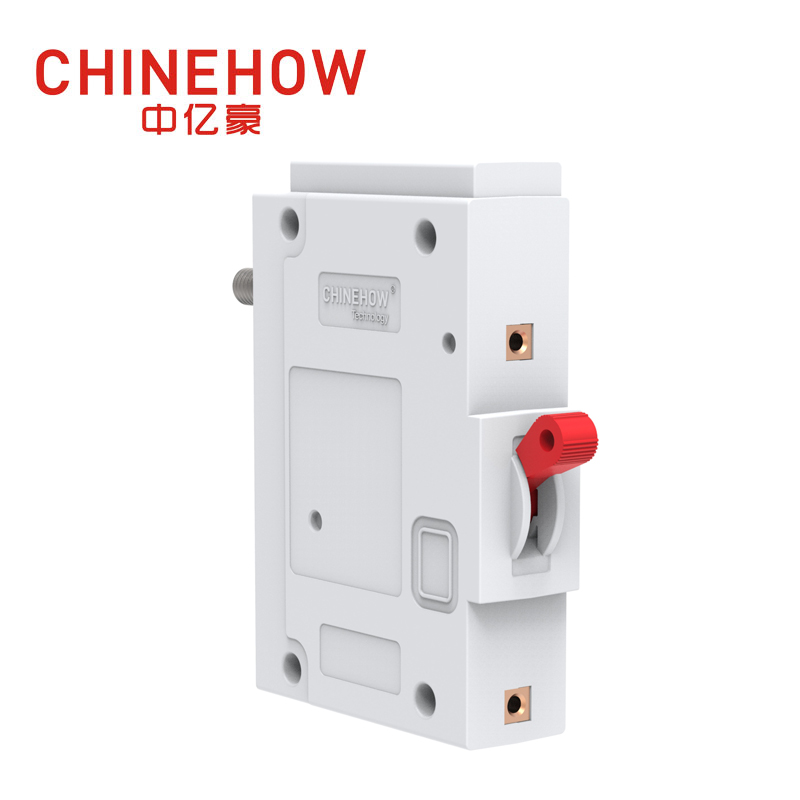
Selecting the correct breaker requires mapping the technology to specific industry applications. Environmental demands and operational load characteristics dictate the optimal choice. Misapplying a breaker type guarantees performance issues, increases maintenance calls, and compromises safety.
Harsh environments demand robust components. Marine applications, railway traction systems, and outdoor telecom enclosures experience extreme temperature swings. A ship's engine room might exceed 60°C, while an outdoor telecom box might face -30°C winters. These conditions require environmentally immune components. Hydraulic magnetic breakers guarantee consistent protection regardless of these severe climate variations, ensuring that navigation systems or communication arrays remain powered.
High-density panels present another critical application. Data center power distribution units (PDUs) and server racks pack numerous breakers into tight spaces. The servers generate massive amounts of localized heat. This ambient heat would cause standard thermal breakers to trip prematurely, taking critical servers offline and causing massive data disruptions. Hydraulic magnetic breakers ignore this ambient heat, ensuring uninterrupted power to the data center infrastructure.
Mobile and generator equipment also benefit from this technology. Portable generators deploy globally, moving from arctic conditions to desert environments. Equipment manufacturers cannot predict the operating climate. Specifying hydraulic magnetic breakers ensures the generator provides consistent, rated power output regardless of its geographic deployment, preventing the need for operators to swap breakers based on the season.
Standard commercial and residential applications remain the primary domain for thermal magnetic breakers. HVAC systems, lighting panels, and indoor distribution boards typically operate in climate-controlled environments. Ambient temperatures remain relatively stable, usually between 20°C and 25°C. In these scenarios, the temperature sensitivity of thermal breakers does not pose a significant operational risk, and they provide adequate protection for standard wiring.
Motor loads represent an ideal application for thermal mechanisms. Electric motors draw significant inrush current during startup, often six to eight times their running current. They also heat up gradually during sustained operation. The natural thermal memory of the bimetallic strip aligns perfectly with the heating characteristics of the protected motor. The breaker provides superior calibration at near-running overloads, preventing nuisance trips during startup while offering reliable protection against sustained, damaging overloads that could melt motor windings.
The choice between a hydraulic magnetic circuit breaker and a thermal magnetic circuit breaker is fundamentally a choice between environmental immunity and application suitability. Understanding the mechanical differences ensures you deploy the right technology for the specific operational environment, preventing costly downtime and equipment damage.
If the application involves extreme temperature variations, high-density heat generation, or requires immediate reset capabilities, specify Hydraulic Magnetic Circuit Breakers. Their precision and temperature immunity justify their use in critical infrastructure. If the environment is climate-controlled and involves near-running motor overloads, thermal magnetic breakers remain the reliable industry standard.
To ensure optimal system protection, follow these actionable steps:
Review the specific trip curves and derating charts for your intended operating environment before finalizing panel designs.
Calculate potential enclosure heat rise under peak load conditions to identify hidden thermal risks.
Analyze the inrush current profiles of your connected equipment to select the appropriate delay curve.
Consult with a specialized breaker manufacturer to validate your selection against real-world deployment data.
A: The primary advantage is its immunity to ambient temperature changes. It will carry its full rated current and trip at its specified fault current regardless of whether it is in a freezing outdoor environment or a hot, high-density equipment rack.
A: Yes. Because they rely on heat to trip, operating a thermal magnetic breaker in an environment hotter than its calibrated baseline (typically 25°C or 40°C) requires precise derating of the breaker's capacity to prevent nuisance tripping.
A: No. After a trip, the bimetallic strip inside a thermal magnetic breaker must physically cool down and return to its original shape before the mechanism will latch and allow a reset. Hydraulic magnetic breakers, however, allow for instant resetting.
A: Yes, for moderate overloads. A hydraulic magnetic circuit breaker generally responds faster to low-to-moderate faults, whereas thermal magnetic breakers intentionally take more time to heat up and trip. For severe short circuits, both utilize an instantaneous magnetic mechanism.
A: Data center power distribution units (PDUs) generate significant localized heat. Hydraulic magnetic breakers prevent nuisance tripping caused by this ambient heat, ensuring uninterrupted power to critical servers and maintaining maximum uptime.
A: Yes. They utilize precision components like fluid-filled dashpots and robust solenoids that do not degrade under extreme thermal cycling. This makes them highly reliable for marine, railway, and outdoor telecom applications where environmental conditions fluctuate wildly.


